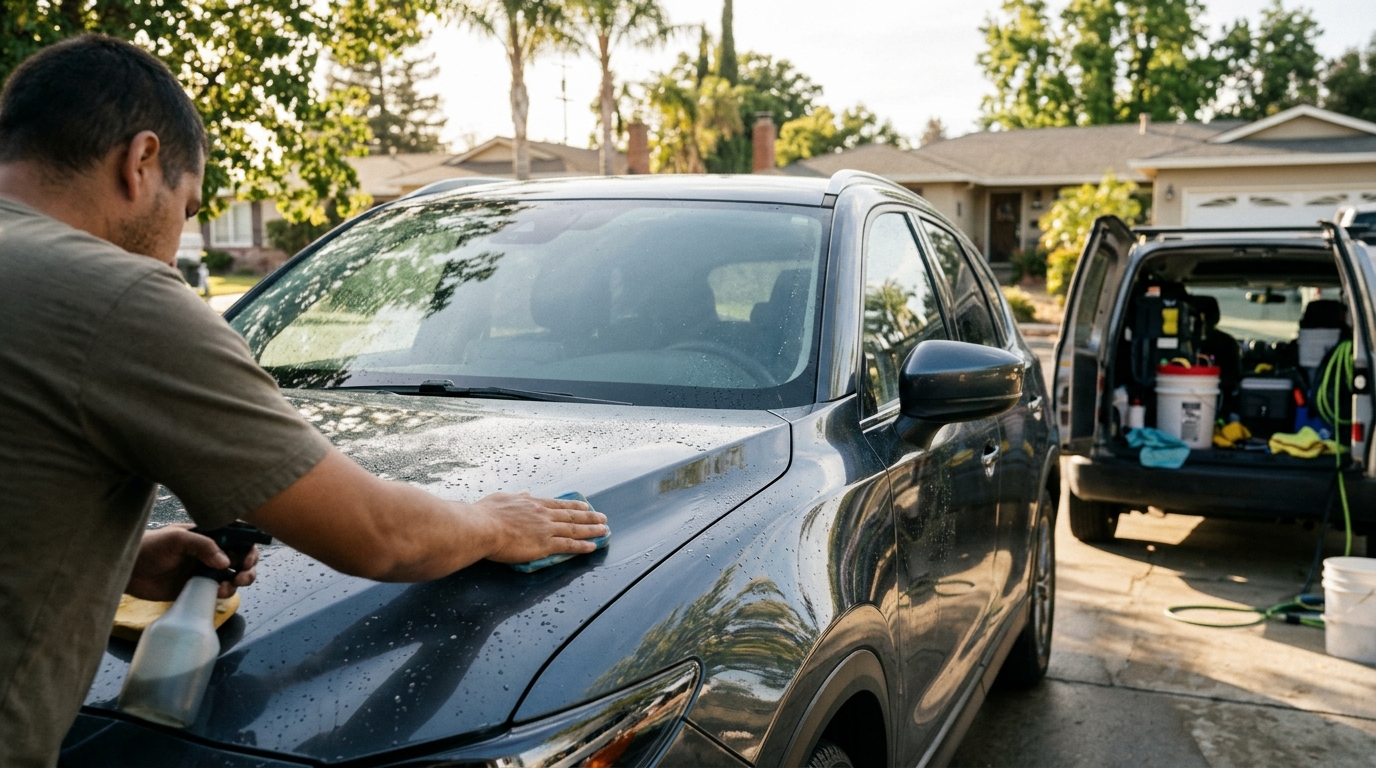
San Jose vehicle owners face unique environmental challenges that standard washing cannot address. Industrial fallout, tree sap, and coastal salt air embed into paint, creating a rough texture that feels like sandpaper. Clay bar decontamination is the process of using a pliable compound to physically remove bonded contaminants from a vehicle's surface. This guide outlines the most effective methods for restoring a smooth finish in the Bay Area.
1. Traditional Clay Bar with Dedicated Lubricant
2. Clay Mitts for High-Speed Application
Ideal for large vehicles like SUVs and trucks. A clay mitt is a fabric pouch filled with clay beads. It covers more surface area than a traditional bar, reducing the time required for large vehicles. This option is particularly useful for three-row SUVs and trucks common in the San Jose area.
3. Spray Wax with Integrated Clay
Combines decontamination and protection in one step. These products contain fine clay particles suspended in a wax formula. They remove light contamination while depositing a protective layer. This is a convenient option for maintenance washes rather than deep restoration.
4. Liquid Clay Solutions
Best for quick touch-ups and smaller panels. Liquid clay is a spray-on solution that loosens contaminants without physical friction. It is less aggressive than a traditional bar, making it safer for older or softer paint. This option works well for spot cleaning specific areas of the vehicle.
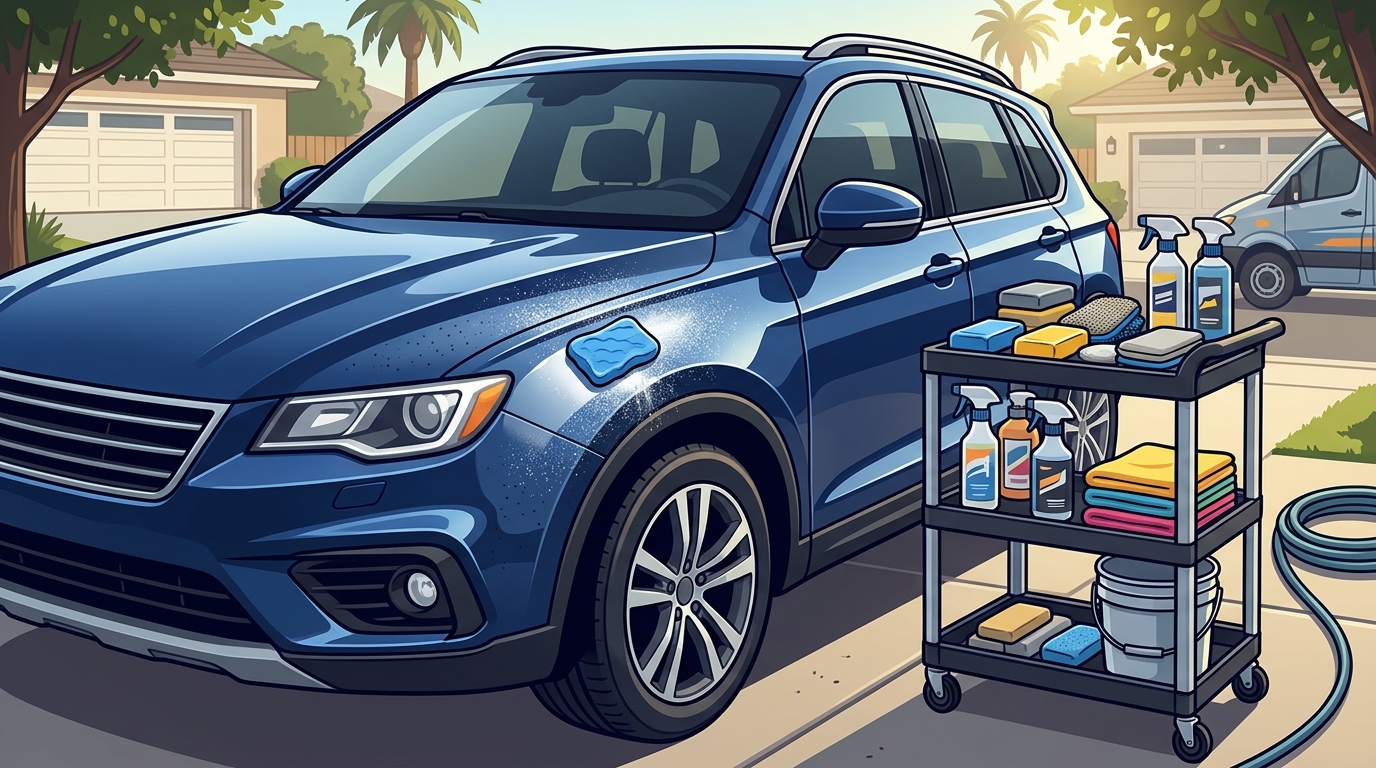
5. Foam Cannon with Clay Additive
Efficient for pre-wash decontamination. Adding clay to a foam cannon creates a thick lather that lifts dirt before contact. This method reduces the risk of swirl marks during the initial wash. It is a popular choice for detailing enthusiasts who want to streamline their workflow.
6. Professional Mobile Detailing Service
For those who prefer a hands-off approach, Robinson's Mobile Detailing brings professional-grade decontamination directly to your driveway. Our team treats every vehicle with the care and expertise needed to restore a flawless finish.
7. DIY Kit with Microfiber Cloths
Choosing the Right Option for Your Vehicle
Select a method based on the level of contamination and your available time. For heavy buildup, a traditional clay bar or professional service is best. For light maintenance, spray wax or liquid clay suffices. Always test a small, hidden area first to ensure compatibility with your paint.
Frequently Asked Questions
How often should I clay bar my car in San Jose?
It is recommended to clay bar your vehicle every six to twelve months. This frequency depends on your driving environment and exposure to industrial areas. Regular decontamination prevents long-term damage to your clear coat.
Can I use a clay bar on a ceramic coated car?
Yes, but you must use a lubricant compatible with ceramic coatings. Avoid aggressive rubbing that could degrade the coating. A gentle, smooth motion is essential to preserve the hydrophobic properties of the ceramic layer.
What is the difference between a clay bar and a clay mitt?
Do I need to wash my car before claying?
Yes, a thorough pre-wash is mandatory to remove loose dirt. Claying over loose debris can cause scratches. Ensure the paint is clean and cool to the touch before applying the clay bar.
Where can I find professional mobile detailing in San Jose?
Robinson's Mobile Detailing serves the San Jose and Bay Area regions. We offer comprehensive packages that include decontamination as part of our exterior services. To plan your visit, contact our team.
Conclusion
Choosing the right decontamination method depends on your vehicle's condition and your schedule. For a hassle-free, professional result, consider booking with Robinson's Mobile Detailing. Our team brings the necessary expertise and equipment to your location, ensuring your vehicle looks its best without the effort.