
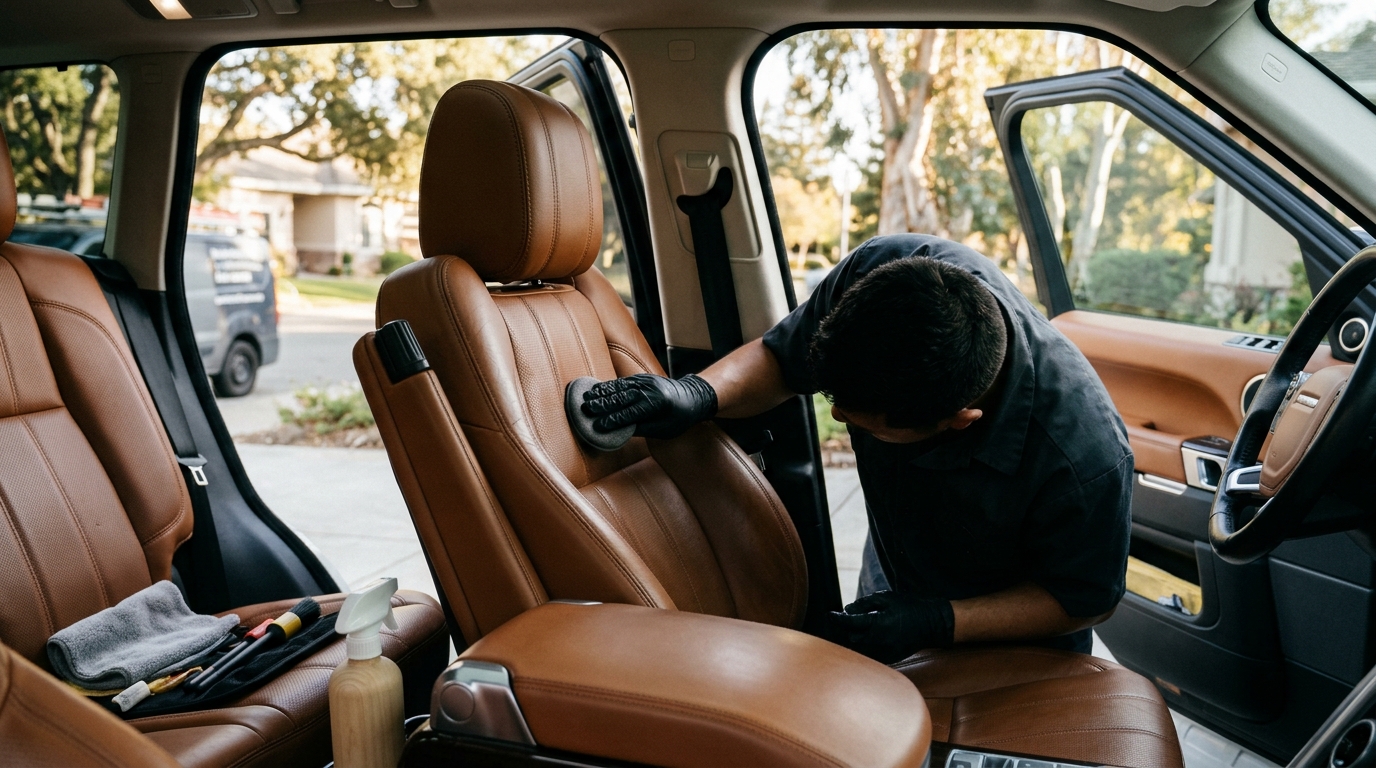
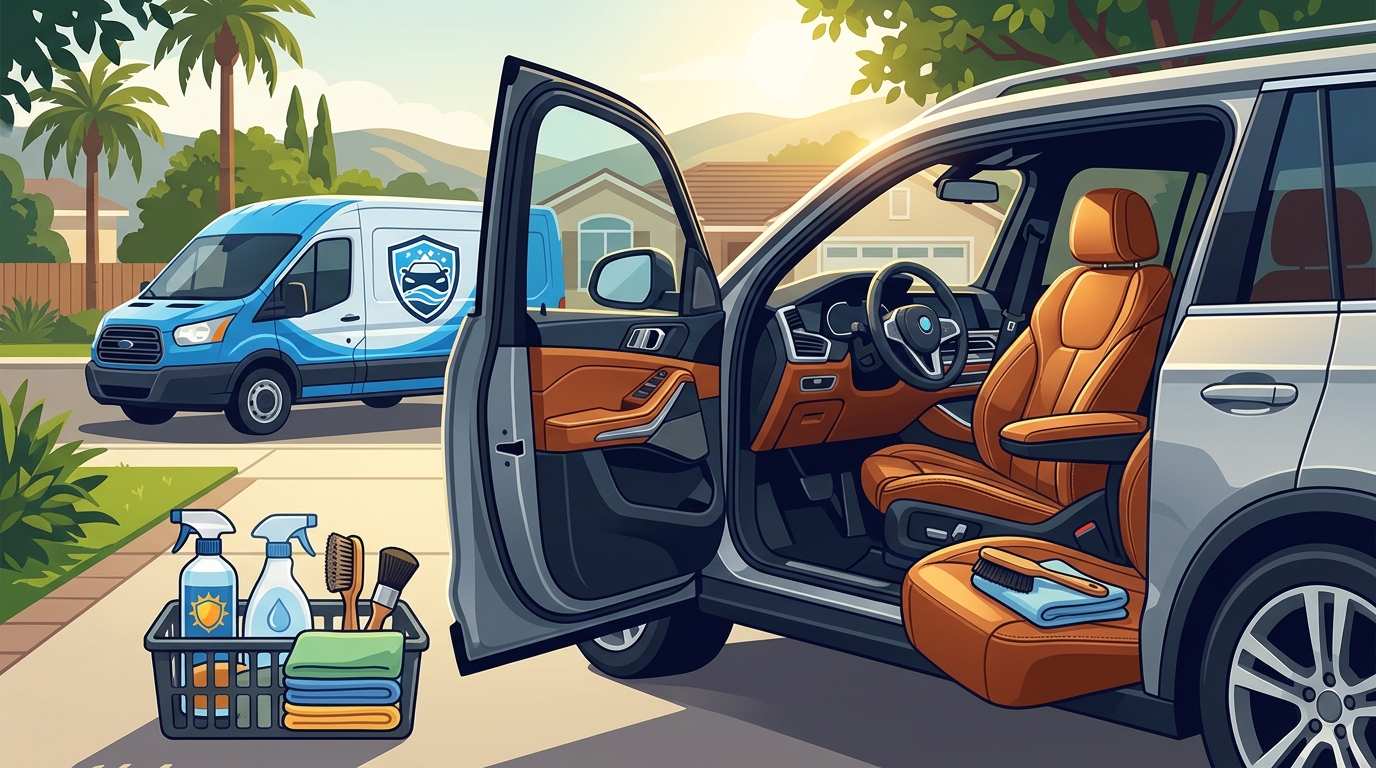
When selecting a Bay Area detailer for leather interior conditioning, prioritize providers who use pH-balanced cleaners and UV-protectant conditioners rather than harsh solvents. The local climate accelerates leather degradation, making professional-grade products essential. Robinson's Mobile Detailing offers mobile services in San Jose and the broader Bay Area, bringing this specialized care directly to your driveway.
Understanding Leather Degradation in the Bay Area
Leather is a natural material that reacts to environmental stressors. In the Bay Area, vehicles face a unique combination of intense summer heat and coastal humidity. This fluctuation causes leather to dry out, crack, and fade faster than in more temperate climates. Standard car wash soaps often strip natural oils, accelerating this damage. A professional detailer understands these local variables. They select products that counteract specific regional wear patterns. This knowledge is the first indicator of a qualified provider. For additional details, review the Customer Experience.
Product Quality and Chemical Safety
The quality of the products used defines the longevity of the treatment. Leather conditioner is a specialized emulsion that replenishes lost oils and creates a protective barrier. Many low-cost detailers use silicone-based sprays that feel slick but do not penetrate the material. These products can clog pores and lead to long-term brittleness. Look for detailers who use water-based, pH-balanced cleaners. These solutions clean without stripping the natural tannins from the hide. Ask about the specific brands they use. Reputable providers will name their products and explain why they are safe for your specific leather type. For additional details, review the Frequently Asked Questions.
Mobile Convenience and On-Site Assessment
Mobile detailing eliminates the need to transport your vehicle to a shop. This convenience is particularly valuable for busy professionals in the San Jose tech corridor. However, mobile service requires a different approach to assessment. A skilled mobile detailer must be able to diagnose leather condition in various lighting conditions. They should inspect for existing cracks, stains, and discoloration before applying any product. This on-site assessment ensures the treatment addresses actual damage rather than just surface dust. It also allows for immediate consultation on repair options if the leather is severely compromised.
Experience with Specific Vehicle Types
Not all leather interiors are created equal. Luxury sedans, family SUVs, and trucks present different challenges. Interior detailing is a comprehensive process that includes cleaning, conditioning, and protecting all interior surfaces. A detailer experienced with high-mileage family SUVs understands how to treat heavily used armrests and seat bolsters. They know how to address sweat stains and food spills that penetrate deep into the grain. Conversely, a detailer focused on luxury sedans may prioritize aesthetic perfection over durability. Match the detailer's experience to your specific vehicle type. This alignment ensures they have the right tools and techniques for your needs.
Verifying Professional Standards and Guarantees
Key Takeaways
- Choose detailers who use pH-balanced, water-based products rather than harsh solvents or silicone sprays.
- Verify that the provider understands Bay Area climate impacts on leather durability.
- Ensure the detailer performs a thorough on-site assessment before applying any products.
- Match the detailer's experience to your specific vehicle type, such as SUVs or luxury sedans.
- Look for clear communication, transparent pricing, and a satisfaction guarantee.
Frequently Asked Questions
How often should I condition my leather interior in the Bay Area?
Due to the intense sun and temperature fluctuations, conditioning every three to four months is recommended. This frequency helps maintain the leather's flexibility and prevents cracking. Adjust this schedule based on how often you drive and the specific condition of your seats.
Can I use household leather cleaners on my car seats?
Household cleaners are often too harsh for automotive leather. They may contain ingredients that strip natural oils or cause discoloration. Always use products specifically formulated for automotive use to avoid long-term damage.
What is the difference between cleaning and conditioning leather?
Cleaning removes dirt, oils, and stains from the surface. Conditioning replenishes the natural oils that keep the leather supple. Both steps are necessary for a complete treatment, but they serve different functions in the maintenance process.
Does mobile detailing cost more than shop detailing?
Pricing varies by provider, but mobile services often include a premium for the convenience of on-site service. However, this eliminates the cost and time of transporting your vehicle. Compare total value, including time saved, when evaluating quotes.
How do I know if my leather is damaged beyond conditioning?
Deep cracks, tears, or significant discoloration may require professional repair rather than just conditioning. A skilled detailer can assess the extent of the damage and recommend the appropriate course of action during the initial inspection.
Is it safe to condition leather in direct sunlight?
It is best to condition leather in a shaded area or indoors. Direct sunlight can cause the product to dry too quickly, leading to uneven application. It can also heat the leather, making it more susceptible to damage during the process.
Conclusion
Selecting the right detailer for your leather interior requires careful consideration of product quality, local expertise, and professional standards. By focusing on these factors, you ensure your vehicle's interior remains protected and aesthetically pleasing. Robinson's Mobile Detailing provides this level of care in the Bay Area, combining professional products with the convenience of mobile service. Contact them today to schedule your appointment and experience the difference quality care makes. Learn more: Robinson s Mobile Detailing.